
Get a clear answer about your hearing
A hearing test is a painless check that measures the softest sounds you can hear and how clearly you understand speech.
At our Sector 33D clinic, experienced audiologists test adults, children and newborns from Chandigarh, Mohali and Panchkula using advanced equipment. You learn the type and degree of any hearing loss, and what to do next.
- Freehearing test and ear check
- 20+ yearsof audiology experience
- All agesfrom newborns to seniors
- 4 testsunder one roof
When should you get your hearing tested?
Book a test if any of these sound familiar, for you or someone close to you.
- You often ask people to repeat themselves.
- Conversations are hard to follow in noisy places.
- Family says the TV or phone volume is too loud.
- You hear ringing or buzzing in your ears (tinnitus).
- You have ear pain, infections or a blocked feeling.
- You are over 50 or work around loud noise.
- Your newborn needs a hearing screening.
- Your child is slow to respond to sounds or to talk. See 10 signs
Which hearing test is right for you?
Our audiologist picks the tests after a short consultation. Here is how they compare.
| Test | Best for | What it checks | Time | Patient responds? |
|---|---|---|---|---|
| Audiometry | Adults and older children | Hearing level at each pitch and speech understanding | 20–30 min | Yes |
| BERA | Infants, young children, suspected nerve problems | Hearing nerve and brainstem pathway | About 1 hour | No |
| OAE | Newborn screening and children | Outer hair cells of the inner ear | 5–10 min | No |
| Impedance | Blocked ears, fluid, ear infections | Eardrum movement and middle ear function | 5–10 min | No |
Audiometry test
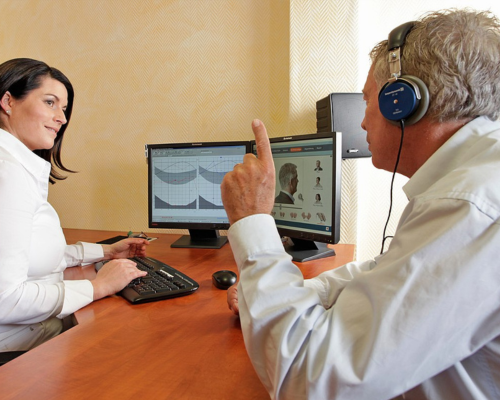
The audiometry test is the standard hearing test for adults and older children. It finds the softest sounds you can hear at different pitches and checks how clearly you understand speech.
How it works
You sit in a soundproof booth wearing headphones. The audiologist plays tones and words, and you press a button or raise your hand each time you hear one. Your results are plotted on a chart called an audiogram.
Types of audiometry
- Pure-tone audiometry finds your hearing threshold from low to high pitches.
- Speech audiometry checks how well you understand speech, in quiet and in background noise.
BERA test
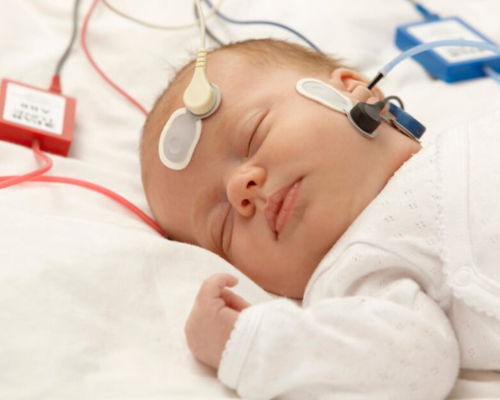
BERA (Brainstem Evoked Response Audiometry), also called the ABR test, checks how the hearing nerve carries sound signals from the ear to the brainstem. The patient doesn't need to respond, so it works for babies and anyone who can't take a standard hearing test.
Who it's for
Infants, young children, and adults with suspected nerve-related hearing loss.
How it works
Small electrodes are placed on the head and behind the ears. Soft clicks are played through earphones while a computer records the brainstem's response. Children need to be asleep, and adults need to lie still and relaxed.
What it tells us
Whether hearing loss is sensorineural or conductive, and how well the hearing nerve works. This guides treatment such as hearing aids or cochlear implants.
OAE test
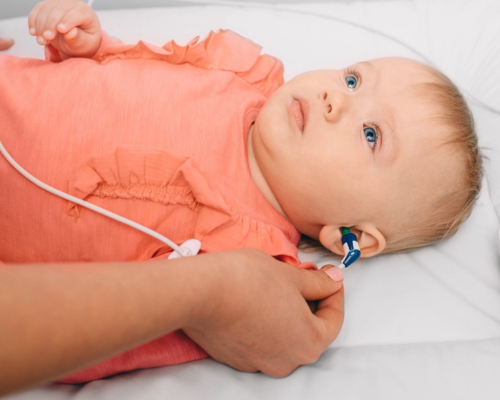
The OAE (Otoacoustic Emissions) test is a quick, non-invasive check of the outer hair cells in the inner ear (cochlea). It is the most common test for newborn hearing screening.
Who it's for
Newborns, young children, and adults for whom standard hearing tests are difficult.
How it works
A soft probe with a tiny speaker and microphone sits in the ear canal. It plays gentle clicks or tones and records the faint echoes the hair cells send back. It takes only a few minutes.
What the results mean
Normal echoes show healthy outer hair cells. Weak or absent echoes may point to a problem in the inner ear, and a BERA test is usually the next step.
Impedance test
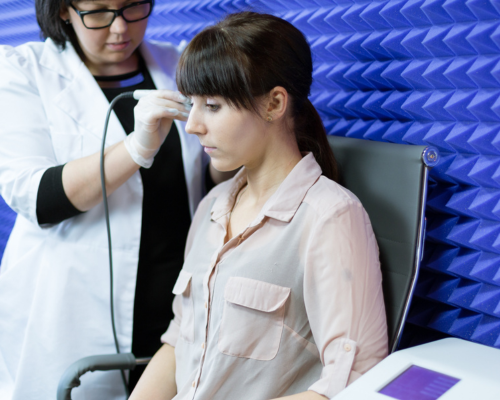
Impedance audiometry checks how well the middle ear passes sound from the eardrum to the inner ear. It helps find fluid behind the eardrum, a perforated eardrum, Eustachian tube problems, and stiffness of the tiny middle ear bones (ossicles).
How it works
A soft-tipped probe in the ear canal gently changes the air pressure, plays a tone and measures how much sound bounces back. It is painless and takes a few minutes.
Types of impedance testing
- Tympanometry measures middle ear pressure and how freely the eardrum moves.
- Acoustic reflex test checks the small muscle reflex that protects the inner ear from loud sounds.
What happens at your visit
Most hearing test appointments follow four simple steps.
- ConsultationTell the audiologist about your symptoms, health history and any earlier reports.
- Ear examinationWe check your ears for wax, infection or blockage before testing.
- Hearing testsWe run only the tests you need, based on your age and symptoms.
- Results and adviceYour audiogram is explained in plain language, with clear next steps.
Hearing test FAQs
Answers to the questions our patients ask most.
Is the hearing test free at Echo Hearing Solutions?
Yes. The hearing test and ear health check at our Sector 33D, Chandigarh clinic are free. Ask about charges for specialised tests such as BERA, OAE and impedance audiometry when you book.
How long does a hearing test take?
A standard audiometry test takes 20 to 30 minutes. A BERA test takes about an hour, because the patient needs to be relaxed or asleep.
Is a hearing test painful?
No. Audiometry, OAE and impedance tests are non-invasive: you listen to sounds or wear a soft probe in the ear. BERA uses small stick-on electrodes on the skin.
Which hearing test do I need?
Most adults start with pure-tone and speech audiometry. Impedance testing is added when a middle ear problem is suspected. OAE and BERA are used for newborns, young children and suspected nerve-related hearing loss. Our audiologist decides after a short consultation.
Can newborns and young children be tested?
Yes. OAE and BERA do not need the child to respond, so they are used for newborn hearing screening and for children too young for audiometry.
How should I prepare for a BERA test?
Keep babies and young children awake before the appointment so they sleep naturally during the test. Adults should come with clean, dry hair, without oil or gel, so the electrodes stick well.
Do I need a doctor’s referral?
No. A referral is not needed for a hearing test. If you have one from an ENT doctor, bring it along with any previous hearing reports.
How often should I get my hearing tested?
Once a year if you are over 50, work around loud noise or wear hearing aids, and sooner if you notice any change in your hearing.
What happens if the test shows hearing loss?
Your audiologist explains your audiogram and the next steps. This may be a referral to an ENT doctor, or a hearing aid trial with brands such as Phonak, Signia, Oticon, Starkey, Widex and ReSound.
Where is your clinic and which areas do you serve?
Our clinic is at SCO 21, Ground Floor, Sector 33D, Chandigarh. We see patients from Chandigarh, Mohali, Panchkula and nearby towns.
After your hearing test
Book your free hearing test in Chandigarh
Visit our Sector 33D clinic. Appointments for adults, children and newborns from Chandigarh, Mohali and Panchkula.
SCO 21, Ground Floor, Sector 33D, Chandigarh 160020info@echohearing.in